Greater Boston is one of the great running cities in America. From the Charles River paths to the Minuteman Bikeway to the world's most famous marathon, this is a town full of serious athletes, and serious athletes get injured. Over four decades treating Cambridge-area patients, I have worked with marathoners, weekend 5K runners, CrossFit athletes, cyclists, tennis players, and high school and college competitors. The principles that keep them healthy are remarkably consistent.
At Bromberg Chiropractic, sports care is a core part of what we do. This post explains how chiropractic care helps athletes on two fronts: resolving the injuries that sideline you, and improving the mechanics that let you train and perform better.
Why Athletes Get Injured
The overwhelming majority of athletic injuries we see are not dramatic, acute traumas. They are overuse injuries, the cumulative result of repetitive load on a body with a mechanical weak link. A runner logging 30 miles a week takes tens of thousands of foot strikes. If even a small mechanical fault, a stiff ankle, a weak hip, a rotated pelvis, alters how force travels through the body, that fault gets multiplied across all those repetitions until something breaks down.
This is why treating only the painful spot so often fails. The IT band that hurts at the knee, the Achilles that is inflamed, the shin that aches, these are frequently the victims of a problem somewhere else in the chain. Lasting results come from finding and fixing the actual source.
Common Injuries We Treat in Athletes
- Runner's knee and IT band syndrome, often driven by hip weakness and pelvic mechanics.
- Plantar fasciitis and Achilles tendinopathy from tight calves and foot mechanics.
- Shin splints from training errors and lower-leg mechanics.
- Tennis and golfer's elbow and other repetitive-strain injuries.
- Rotator cuff and shoulder problems in throwing, swimming, and racquet athletes.
- Hamstring and calf strains, and the chronic tightness that precedes them.
- Low back pain and sciatica from training load and core instability.
How Chiropractic Care Helps Athletes
Finding the Mechanical Source
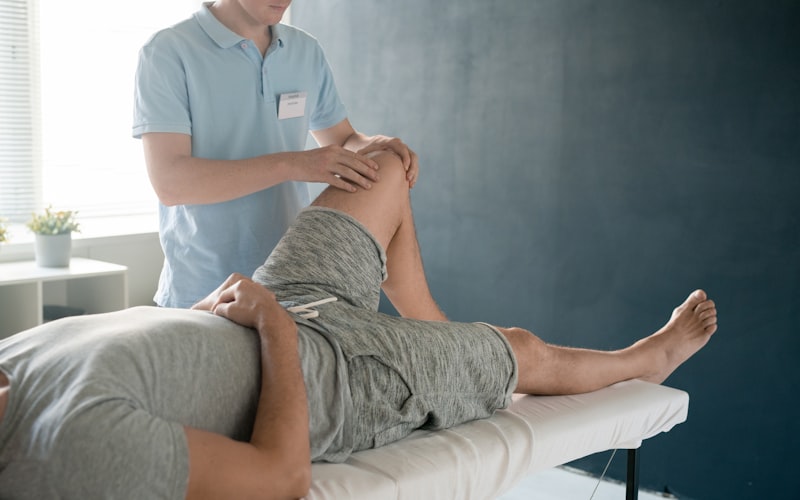
Through gait and movement analysis, we identify the faults that overload tissue: restricted joints, asymmetries, weak links, and faulty movement patterns. For a runner, this might mean spotting that a stiff big toe or a dropped arch on one side is driving a knee problem two joints up the chain.
Restoring Joint Motion
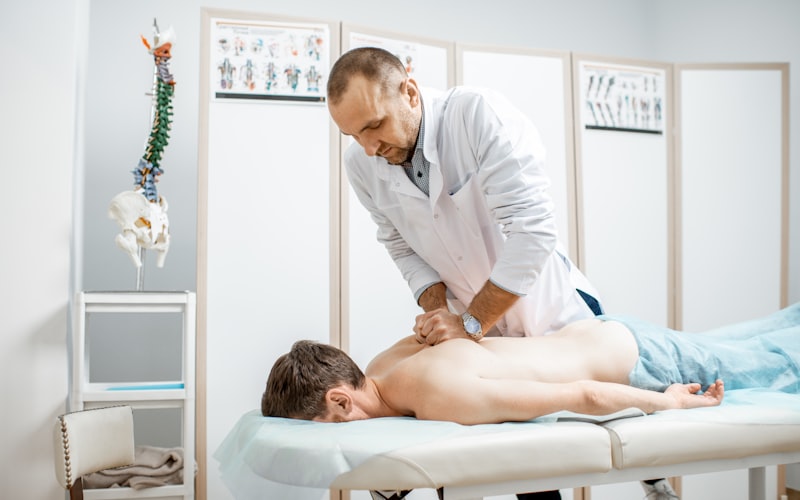
Athletic performance depends on joints that move freely and symmetrically. Restricted segments in the spine, pelvis, and extremities limit power, force compensation, and set up injury. Adjustments restore that motion, which both relieves pain and improves mechanical efficiency.
Treating the Soft Tissue
Hard training creates adhesions and scar tissue in muscles and tendons. Active Release Technique was literally developed for elite athletes, and it remains one of the most effective tools we have for restoring tissue that is restricted, adhered, or chronically tight. We go deeper on this in our post on how ART works.
Rehab and Prevention
The work that prevents the next injury is corrective exercise, building strength and stability in the weak links we identify. A runner with a knee problem driven by hip weakness will keep getting hurt until that hip gets strong. We prescribe specific, progressive programs to address exactly what your assessment reveals.
Recovery and Body Composition
For athletes focused on strength and recovery, some patients also incorporate EMSculpt NEO to build muscle and support core strength as part of their broader conditioning. It is not a substitute for training, but it can be a useful adjunct for certain goals. (Our EMSculpt NEO overview explains what it does and does not do.)
The Performance Angle
Athletes often come to us for pain and stay for performance. When your joints move freely, your tissues are healthy, and your mechanics are sound, you do not just hurt less, you move more efficiently. You waste less energy fighting your own restrictions, you generate force more effectively, and you tolerate higher training loads with less breakdown. Many of our athletic patients use periodic care the way they use any other part of their training: to stay durable and keep performing.
Training for a Race? Start Before You Are Hurt
If you are building toward a marathon, a triathlon, or any goal event, the best time to address your mechanical weak links is before they become injuries, not in the panicked weeks after one derails your training. A pre-season movement assessment can find and fix the issues most likely to sideline you. Contact Bromberg Chiropractic to keep your training on track and your body durable, whatever your sport.