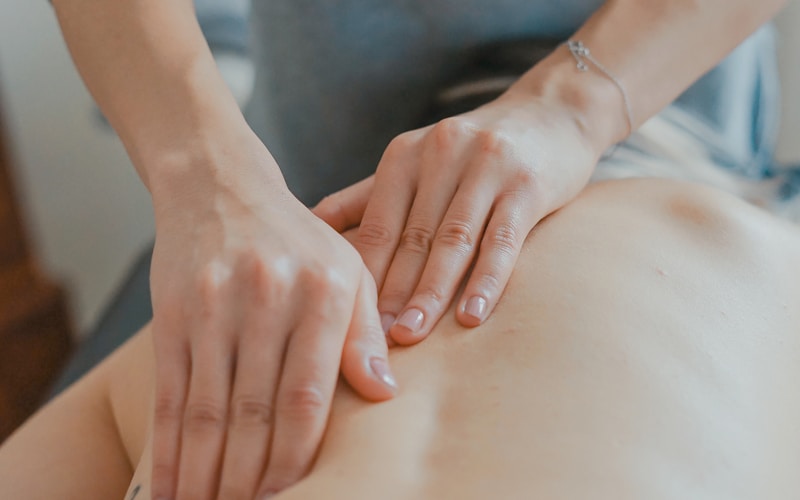
Active Release Technique (ART) and muscle therapy target soft tissue restrictions, scar tissue, and muscle imbalances that cause pain and limit how you move. We use hands-on therapy to break down adhesions, restore blood flow, and speed recovery from sports injuries, overuse, or everyday strain.
Quick answer: Dr. Steven Bromberg treats muscle & tendon therapy at 201 Broadway, Cambridge, MA. Same-week appointments, no referral needed, most major insurance and Massachusetts auto PIP accepted. Call (617) 494-1166.
40+ Years
Doctor-Led
Evidence-Based
Insurance Accepted
Same-Day Available
Muscle & Tendon Therapy
Active Release Technique (ART) and muscle therapy target soft tissue restrictions, scar tissue, and muscle imbalances that cause pain and limit how you move. We use hands-on therapy to break down adhesions, restore blood flow, and speed recovery from sports injuries, overuse, or everyday strain.
How It Works
How Muscle & Tendon Therapy Works
Dr. Bromberg uses Active Release Technique, a patented movement-based system that targets damaged or restricted soft tissue. By applying tension while the patient moves through specific ranges of motion, adhesions break down, scar tissue releases, and normal function returns to muscles, tendons, ligaments, and nerves.
Muscle & Tendon Therapy at 201 Broadway, Cambridge
How We Do Muscle and Tendon Therapy in Cambridge
Muscle and tendon therapy at Bromberg Chiropractic means hands-on soft tissue work, mostly Active Release Technique (ART), done by Dr. Bromberg himself at every visit. There is no massage therapist down the hall and no technician running a machine. The person who examines you is the person who treats you, which matters with soft tissue work because the treatment is partly the examination: you learn where the restriction is by feeling how the tissue moves under your hands.
The method is simple to describe. Dr. Bromberg finds the tight or scarred band in a muscle, a tendon, a ligament or the tissue around a nerve. He holds firm tension on it with a thumb or fingers, then has you move the limb through a specific range so the tissue slides out from under the contact. That lengthening under tension is what breaks down adhesions. A session on one problem area is a series of these passes, each one adjusted to what he felt in the last.
What he is looking for is the structure that is actually limiting you, which is often not the spot that hurts. Pain on the outside of the knee is frequently a tight hip. Forearm pain that will not quit is often an irritated band at the elbow. Over more than 40 years in this office he has seen the same Cambridge patterns repeat: forearm and wrist tension in people who type and pipette all day in Kendall Square, tight hip flexors and hamstrings in cyclists on the Charles River paths and in anyone who sits nine hours, calf and plantar fascia restriction in runners, and a locked-up upper trapezius in almost everyone with a laptop.
Soft tissue work rarely stands alone here. If a joint is stuck, releasing the muscle around it buys an hour of relief before the joint pulls it tight again, so most muscle therapy visits also include a spinal or extremity adjustment. If the same restriction keeps returning, Dr. Bromberg looks at why with a posture and gait assessment, and he sends you home with two or three exercises so the tissue has a reason to stay long. For athletes and anyone recently hurt, this work is the core of our sports injury care. If you want the mechanics in more detail, read our explainer on Active Release Technique.
What Your Visits Look Like
The first visit starts with a conversation. When did it start, what do you do with that arm or leg all day, what makes it worse, what have you already tried, and has your training or your work changed recently. Soft tissue problems almost always have a load story behind them, and finding it is half the plan.
Then the exam. Dr. Bromberg checks range of motion against the other side, tests strength, runs the orthopedic tests that fit your complaint, and palpates the tissue to find the restriction. If you have any numbness or tingling, he adds nerve tension tests and a neurological screen, because a muscle problem and a nerve problem can feel alike and are treated very differently. He explains what he found in plain terms, tells you whether he thinks soft tissue work is the right tool, and in most cases treats the same day.
Wear clothes that let him reach the area: shorts for a hip, hamstring or calf, a t-shirt or tank top for a shoulder or neck. ART is done on skin or thin fabric, not through a sweater.
A follow-up is shorter. He asks what changed in the days after the last visit, re-tests the one or two measures that matter for your case, treats, and progresses your home exercises. A typical course is four to six sessions, usually one or two a week for the first couple of weeks and then spaced out as the tissue holds. Long-standing problems, especially tendon issues that have been there for months, take more.
Progress is measured against specific things, not a general feeling. How far the overhead reach gets before it catches. Whether the step-down test still hurts. How many miles you can run before the calf tightens, or whether you can type through an afternoon without the forearm burning. If those numbers are not moving, the plan changes.
What to Expect: Results and Timelines
Many people feel a change in motion after the first session, and that is real, but it is not the same as a fixed problem. Lasting change comes from the course of treatment plus the load changes that go with it. Recent muscle strains respond fastest. Tendon problems that have been there for months, such as tennis elbow or a stubborn Achilles, respond more slowly because tendon tissue remodels slowly. For those, think in weeks, not days.
What slows recovery is usually one of a short list. Continuing the aggravating load at the same volume. Skipping the home exercises. Poor sleep. A stiff joint above or below the painful spot that has not been addressed. And the most common one: a nerve problem that is being treated as a muscle problem. If your symptoms follow a line down the limb or come with numbness, Dr. Bromberg looks at the spine, because arm and leg pain often starts there.
If the plan is not working, he says so. By about the fourth visit there should be measurable change. If there is not, he reassesses: changes the technique, adjusts the joint instead of the muscle, re-examines the spine as a source, or refers. There are no prepaid packages here, so there is no incentive to keep you coming when the approach is wrong.
He refers out when the exam points to something soft tissue work cannot fix. A sudden pop with bruising and weakness, which may be a tear. Bone pain that suggests a fracture or stress fracture. Joint swelling and warmth that suggests inflammatory arthritis. Weakness that is getting worse. A tendon that has not responded and needs an image and an orthopedic opinion. For those he arranges imaging and specialist referrals and sends his notes along.
Who It Is For, and Who It Is Not For
Muscle and tendon therapy is a good fit for repetitive strain from desk and lab work, for runners, cyclists and climbers with recurring tightness or overuse injuries, for scar tissue after an old injury that never quite loosened, and for shoulder, elbow, hamstring, IT band and plantar fascia problems. It also helps people whose adjustments do not hold, because the muscle keeps pulling the joint back out of place.
It is not the right first step for some situations. A fresh tear in its first days needs rest, not pressure. Open wounds, skin infections and rashes over the area rule it out until healed. Calf pain with swelling, warmth or redness could be a blood clot and belongs at urgent care, not here. If you take blood thinners or have a bleeding disorder, tell him, because the pressure is modified. Fresh fractures, known cancer in the area and severe osteoporosis all change what he will do.
Honest limits: ART does not change bone, and it does not repair a fully torn tendon or muscle. It does not replace strengthening. Relief without a change in load is temporary, which is why the home exercises are part of the treatment and not an afterthought.
Cost, Insurance and Booking
We bill per visit. There are no prepaid packages and no long plans sold up front. Soft tissue work done in the same visit as an adjustment is part of that visit. Most major insurance plans are accepted, and we verify your specific benefits before treatment so you know what you owe. Some plans cover spinal manipulation but treat soft tissue therapy differently, which is exactly why we check first rather than guessing. Details on how that works are on our insurance page, and we have written a plain-language guide to what chiropractic care costs in Massachusetts.
No referral is needed. Massachusetts allows direct access to chiropractic care, so you can book or walk in without seeing another doctor first. Walk-ins are welcome during office hours, and same-day slots are held for people in pain. If you would rather book, call (617) 494-1166 and we can usually see you the same week. Hours are Monday, Wednesday and Friday, 8am to 1pm and 3pm to 6pm.
The office is at 201 Broadway, first floor, a six-minute walk up Broadway from the Kendall/MIT Red Line station and about ten minutes from Lechmere on the Green Line. There is free street parking and metered parking on Broadway and the side streets. If this is your first time here, the new patient page covers what to bring and what to expect.
of patients describe chiropractic care as "very effective"
Gallup-Palmer Survey
#1
recommended non-surgical treatment for back pain
American College of Physicians
95%
of past-year chiropractic users say it is effective
Gallup-Palmer College of Chiropractic
Your Doctor
Dr. Steven J. Bromberg
For over 40 years, Dr. Bromberg has provided chiropractic care in Cambridge, MA. He personally evaluates and treats every patient, combining adjustments, muscle therapy, and modern technology for lasting results.
"Dr. Bromberg found the root cause of my lower back pain on my first visit. After three adjustments, I felt like a new person. 40 years of experience really shows."
David R.
Lower back pain, 3 sessions
★★★★★
"I was in a car accident and thought I'd need surgery. Dr. Bromberg's rehab program got me back to normal without a single operation. The insurance paperwork was painless too."
Maria S.
Auto accident whiplash recovery
★★★★★
"The Active Release Technique on my shoulder was remarkable. Years of frozen shoulder pain resolved in about six sessions. I can finally sleep on my side again."
ART is a patented, hands-on soft tissue treatment that targets overused muscles, tendons, ligaments, fascia, and nerves. It combines precise tension with patient movement to break adhesions.
You may feel some discomfort as adhesions are released, but it shouldn't be unbearable. Most patients describe it as "good pain" that leads to immediate relief.
Anyone with soft tissue pain: athletes, office workers with repetitive strain, post-surgical patients, and people with chronic muscle tightness.
Many patients notice improvement after just one session. A typical course is 4-6 sessions depending on the condition.
No. Deep tissue massage applies pressure while you lie still. ART applies tension to a specific restriction while you actively move the limb through its range, so the tissue lengthens under the contact. It is more targeted, usually shorter, and done by Dr. Bromberg as part of a diagnosis and treatment plan rather than as a standalone relaxation session.
Usually reduce, not stop. Complete rest lets the tissue stiffen and does not fix the load problem that caused it. Dr. Bromberg will tell you which movements to cut back and which to keep, and he adjusts that as you progress. A true tear or a stress fracture is different, and he will say so if the exam points that way.
Sometimes. When a nerve is being compressed by a tight muscle, for example the piriformis in the buttock or the pronator muscles in the forearm, releasing that muscle can clear the symptoms. When the numbness comes from the spine, soft tissue work on the limb will not fix it, and Dr. Bromberg will treat the spine instead. Weakness that is getting worse needs prompt medical evaluation, not soft tissue work.
Mild soreness for a day or two is normal and feels like the day after a hard workout. Drink water and keep moving. Sharp pain, swelling or bruising that gets worse is not normal; call the office if that happens.
Yes. If the exam shows the problem is purely in the muscle or tendon, that is what he treats. Many patients do get both in one visit because a stiff joint and a tight muscle usually come together, but the adjustment is never automatic.