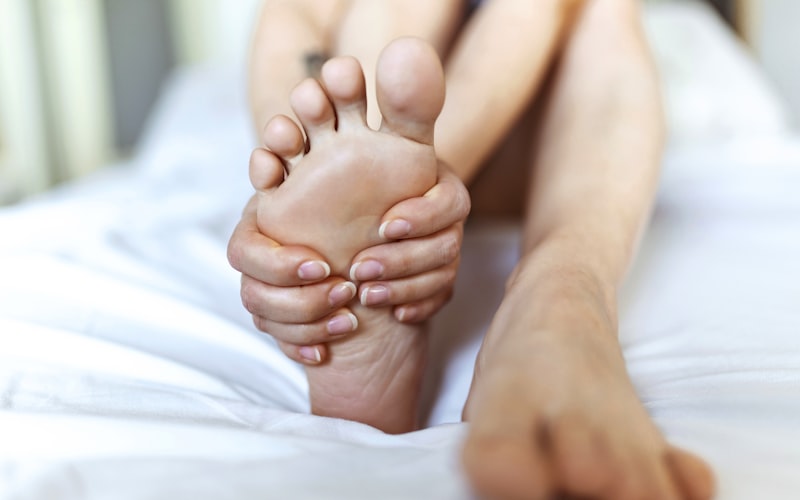
That stabbing pain in your heel? Plantar fasciitis often has root causes in your pelvis, hip, or ankle alignment. Dr. Bromberg treats the full kinetic chain for lasting relief.
Quick answer: Dr. Steven Bromberg treats plantar fasciitis & foot pain at 201 Broadway, Cambridge, MA. Same-week appointments, no referral needed, most major insurance and Massachusetts auto PIP accepted. Call (617) 494-1166.
40+ Years
Doctor-Led
Evidence-Based
Insurance Accepted
Same-Day Available
Understanding Plantar Fasciitis & Foot Pain
That stabbing pain in your heel? Plantar fasciitis often has root causes in your pelvis, hip, or ankle alignment. Dr. Bromberg treats the full kinetic chain for lasting relief.
Common Symptoms
Sharp heel pain in the morningPain after prolonged standingPain improving then worsening with activityTightness in Achilles and calf
Plantar Fasciitis & Foot Pain at 201 Broadway, Cambridge
What Causes Plantar Fasciitis
The plantar fascia is a thick band of connective tissue that runs from the heel bone to the base of the toes. It holds up the arch and stores energy with every step. When the load on it exceeds what it can recover from, small areas of the fascia break down near the heel, and the result is the sharp, bruised feeling under the heel that is worst with the first steps out of bed.
Most people are told it comes from the foot. In our experience at 201 Broadway it rarely starts there. The fascia is the structure that gives out, but the extra load usually comes from somewhere above it.
A stiff ankle or tight calf. When the ankle cannot bend far enough, the foot compensates by rolling in and flattening the arch, which stretches the fascia on every step. A tight Achilles tendon pulls on the same heel bone from the other side.
Hip and pelvic mechanics. A pelvis that sits unevenly, or hip muscles that do not control the leg well, changes how the foot lands. The foot absorbs that error thousands of times a day.
A sudden jump in activity. Starting a running program along the Charles River in spring after a sedentary winter, a new job that keeps you on your feet, or a walking vacation.
Footwear. Flat, worn-out or unsupportive shoes, and long hours in hard-soled dress shoes, shift load onto the fascia. Walking from the Red Line in thin-soled shoes over Cambridge's brick sidewalks adds up.
Body weight and standing time. Lab and clinical staff who stand on hard floors all day, and anyone carrying extra weight, load the fascia for longer than it can tolerate.
Heel pain is not always plantar fasciitis. A heel fat pad injury, a stress fracture of the heel bone, Achilles tendinopathy, nerve entrapment near the ankle, and referred pain from the low back can all feel similar. Sorting that out is the first job.
How We Diagnose It at 201 Broadway
Dr. Bromberg sees every patient himself, and the first visit for heel pain starts with a conversation. When the pain started, what changed in the weeks before it, whether it is worse first thing in the morning or at the end of a day on your feet, what shoes you spend the most time in, and whether you have any back, hip or knee history that might be part of the picture.
The examination then works from the heel upward.
The foot itself. Tenderness at the inside front edge of the heel bone is the classic finding. He checks the fat pad under the heel, the Achilles, the arch and the small joints of the midfoot.
Ankle range of motion. How far the ankle bends with the knee straight and with it bent. This separates a tight calf from a stiff joint, which are treated differently.
Knee, hip and pelvis. Hip rotation, pelvic level, and how well the hip muscles stabilize the leg on one foot.
Gait and standing posture. He watches you walk and stand to see where the arch collapses and whether one side is working harder than the other. This is the posture and gait analysis component, and it is where the pelvis-to-foot connection usually shows itself.
Nerve screening. A few quick tests rule out tarsal tunnel entrapment and pain referred from the low back, which can mimic heel pain and will not respond to foot treatment.
Imaging is not needed for most cases of plantar fasciitis. Dr. Bromberg orders an X-ray when he suspects a stress fracture, when there has been a specific injury, or when pain has not responded to treatment as expected. Ultrasound or MRI is reserved for cases where a fascia tear or another soft tissue problem needs to be confirmed. He refers to area imaging centers through our imaging referrals and reviews the results with you himself.
How We Treat Plantar Fasciitis
Treatment has two parts: calm the fascia down, and change the load that injured it so it does not come back. Working on the foot alone handles the first part. Only the second part gives lasting relief.
Soft Tissue Work on the Calf, Achilles and Fascia
Active Release Technique is hands-on work that combines focused pressure with movement to free tissue that has become tight or stuck. For plantar fasciitis, Dr. Bromberg applies it to the calf muscles, the Achilles tendon and the fascia itself. Releasing the calf reduces the pull on the heel bone with every step. Most patients notice the morning stiffness ease within the first few sessions. Details are on our muscle therapy page.
Adjustments to the Foot, Ankle and Pelvis
The foot has more than two dozen joints, and when the ones around the ankle and midfoot stop moving well, the arch cannot do its job. Gentle chiropractic adjustments to the ankle and midfoot restore that motion. When the pelvis or sacroiliac joints are contributing, he adjusts those as well, because an uneven pelvis changes the way the whole leg lands.
Correcting the Kinetic Chain
Based on what the gait analysis shows, Dr. Bromberg prescribes a short set of exercises: calf and fascia stretching done in a specific way, foot intrinsic strengthening, and hip stability work when the hip is the weak link. These take a few minutes a day and are the part of the plan that prevents recurrence.
Footwear and Daily Load
We do not sell shoes or inserts and do not recommend a specific brand. What we do is look at what you wear most and tell you what features your foot needs: a firm heel counter, some arch support, a sole that does not fold in half, and enough cushioning for the surfaces you walk on. For some patients a temporary over-the-counter insert helps while the fascia heals. Rigid custom orthotics are rarely the first answer and are discussed only if the foot structure calls for them. We also talk through how to spread standing and walking time so the fascia gets a chance to recover.
For a plain-language walkthrough of self-care that helps and self-care that wastes time, read plantar fasciitis heel pain relief on our blog.
What Your Visits Look Like
First visit. History, the examination described above, gait analysis, and a plan. In most cases treatment starts the same day with soft tissue work on the calf and fascia and any adjustments that are indicated. You leave with one or two exercises and specific guidance on shoes and activity for the next week. Walk-ins are welcome during office hours and we hold same-day slots for patients in pain. No referral is needed in Massachusetts.
Follow-up visits. Each visit begins with a quick recheck: morning pain level, how long it takes to loosen up, and how the ankle and hip are moving. Treatment is adjusted based on that, not on a fixed script. As the heel calms down, the emphasis shifts from hands-on work to the strengthening and gait correction that keep it from returning.
How many visits. A typical course for plantar fasciitis runs two visits a week for the first two to three weeks, then once a week as the pain settles. Many patients are discharged within six to eight weeks with a home program. Cases that have been going on for a year or more, or that involve a significant hip or pelvic contribution, take longer. Dr. Bromberg tells you at the first visit what he expects and revises it based on real progress. We do not sell prepaid packages.
How we measure progress. Three markers matter most: the intensity of the first steps in the morning, how far you can walk or stand before the heel complains, and ankle range of motion measured at each visit. When those are moving in the right direction, the plan is working. When they stall for two weeks, the plan changes.
What to Expect: Outcomes and Timelines
Plantar fasciitis is one of the more predictable conditions we treat, provided the cause above the foot is addressed. Most patients notice the morning pain soften within the first two weeks. Walking tolerance improves over the following month. Full resolution, meaning you forget about the heel, usually takes two to three months of combined treatment and home exercise. The fascia is slow tissue; it heals, but it does not heal fast.
Several things slow recovery:
Continuing the activity that caused it at the same volume. Running through it or standing twelve-hour shifts without changes prolongs the problem.
Going barefoot on hard floors at home. This is the most common thing undoing progress between visits.
Skipping the calf and hip work. Treatment on the heel feels good, but the exercises are what hold the gains.
A long history before treatment. Pain that has been present for more than six to twelve months has often become degenerative rather than inflammatory, and responds more slowly.
Dr. Bromberg reassesses at about the four-week mark. If progress is clear, the plan continues and visit frequency drops. If it is not, he looks again for a cause he may have underweighted, orders imaging if a stress fracture or tear is possible, and may refer you to a podiatrist or sports medicine physician for a second opinion or for options outside our scope. Heel pain that comes with numbness, swelling, or pain at rest is referred promptly rather than treated through.
When to See Someone Else First
Most heel pain is safe to bring to us directly. A few situations call for a physician, urgent care or the emergency room first:
Heel pain that started with a fall, a jump from height, or a direct blow, especially if you cannot put weight on it
A heel or foot that is hot, red and swollen, or pain accompanied by fever, which can signal infection or gout
Numbness or tingling spreading through the foot, or weakness in the foot or ankle
A sudden pop at the heel or arch followed by immediate loss of function, which may be a fascia or Achilles rupture
Pain in both heels that comes with low back stiffness, eye inflammation or a history of inflammatory arthritis
Heel pain in a patient with diabetes, poor circulation, or a known cancer history
If none of those apply, call (617) 494-1166 or walk in during hours. We are a six-minute walk up Broadway from the Kendall/MIT Red Line station, with free street parking on Broadway and the side streets.
of patients describe chiropractic care as "very effective"
Gallup-Palmer Survey
#1
recommended non-surgical treatment for back pain
American College of Physicians
95%
of past-year chiropractic users say it is effective
Gallup-Palmer College of Chiropractic
Your Doctor
Dr. Steven J. Bromberg
For over 40 years, Dr. Bromberg has provided chiropractic care in Cambridge, MA. He personally evaluates and treats every patient, combining adjustments, muscle therapy, and modern technology for lasting results.
"Dr. Bromberg found the root cause of my lower back pain on my first visit. After three adjustments, I felt like a new person. 40 years of experience really shows."
David R.
Lower back pain, 3 sessions
★★★★★
"I was in a car accident and thought I'd need surgery. Dr. Bromberg's rehab program got me back to normal without a single operation. The insurance paperwork was painless too."
Maria S.
Auto accident whiplash recovery
★★★★★
"The Active Release Technique on my shoulder was remarkable. Years of frozen shoulder pain resolved in about six sessions. I can finally sleep on my side again."
By correcting alignment issues in the ankle, knee, hip, and pelvis that put abnormal stress on the plantar fascia. We also use soft tissue therapy on the fascia itself.
With proper treatment, most patients see significant improvement in 4-6 weeks. Addressing biomechanical causes prevents recurrence.
Overnight the foot rests in a pointed position and the fascia shortens slightly. The first steps stretch it abruptly over the damaged area near the heel, which is why the first minute out of bed is often the worst part of the day. As the calf and fascia loosen, that morning pain is usually the first thing to improve with treatment.
Usually not completely. Dr. Bromberg typically asks patients to cut volume and avoid hills and speed work for a few weeks, keep the fascia moving with gentle walking, and build back as pain tolerance improves. Complete rest tends to leave the calf tight and the arch weak, which sets up a relapse when you return.
Not as a first step. Many patients improve with a supportive shoe and the calf, foot and hip work in their plan, and a temporary over-the-counter insert is enough for those who need extra support while the fascia heals. We do not sell inserts or recommend specific brands. Custom orthotics are discussed only when the structure of the foot genuinely calls for them.
Yes. If one side of the pelvis sits lower or the hip muscles do not control the leg well, the foot on that side lands differently and the arch collapses more with every step. That extra load ends up at the fascia. It is one reason heel pain often shows up on only one side, and why treating the foot alone sometimes does not hold.
Most major insurance plans are accepted, and chiropractic care for foot and ankle conditions is generally covered the same way as care for the spine under those plans. We verify your specific benefits before treatment so you know what you owe. Call the office and we will check for you.