One of the most frustrating things I hear from older patients is some version of this: "I can walk through the whole grocery store as long as I am leaning on the cart, but I cannot make it to the mailbox standing up straight." They assume their legs are the problem. Almost always, the real problem is in their lower back. That very specific pattern, leg pain and heaviness that comes on with walking and eases the moment you sit or lean forward, is the signature of lumbar spinal stenosis.
At Bromberg Chiropractic, we have helped Cambridge and Greater Boston patients manage spinal stenosis for over 40 years, and the message I want every patient to hear is this: a stenosis diagnosis does not automatically mean surgery. Most people get meaningful relief from conservative, non-surgical care. Here is how stenosis works and what actually helps.
What Spinal Stenosis Actually Is
Stenosis simply means narrowing. Spinal stenosis is a narrowing of the spaces inside your spine, either the central canal that houses the spinal cord and nerves, or the smaller openings (foramina) where individual nerve roots exit. When those spaces narrow, the nerves running through them get crowded and compressed, and that pressure produces pain, numbness, and weakness, often far away from the spine itself.
Stenosis is overwhelmingly a condition of wear and age. It develops slowly over years as several changes stack up:
- Arthritis and bone spurs on the spinal joints, which thicken and encroach on the nerve spaces.
- Disc changes. As discs lose height and bulge with age, they take up room the nerves need. (See our guide to disc injuries and how they heal.)
- Thickened ligaments. The ligamentum flavum inside the canal stiffens and buckles inward over time.
Stenosis is most common in the lower back (lumbar) and the neck (cervical). This article focuses mainly on the lumbar form, because that is what produces the classic walking-related leg symptoms.
The Telltale Sign: Neurogenic Claudication
The hallmark of lumbar stenosis is a symptom called neurogenic claudication. In plain terms: pain, aching, heaviness, or pins-and-needles in the buttocks and legs that comes on when you stand and walk, and reliably eases when you sit down or bend forward.
There is a clear mechanical reason for this. Bending forward opens up the spinal canal and gives the crowded nerves more room. Standing and arching backward narrows it further. That is why stenosis patients instinctively lean on a shopping cart, find walking uphill easier than downhill, and can bike for far longer than they can walk. We sometimes call it the "shopping cart sign," and it is one of the most useful clues in the entire exam.
Stenosis, Sciatica, and Herniated Discs: Not the Same Thing
These conditions overlap and often get confused. The simple distinction is the pattern. A herniated disc with sciatica tends to strike younger, hurts more when you sit or bend forward, and often appears suddenly. Stenosis tends to strike after age 60, hurts more when you stand and walk, eases when you bend forward, and builds gradually. Telling them apart matters, because the treatment emphasis is different. This is also why a careful diagnosis beats guessing from symptoms alone.
How We Evaluate Stenosis
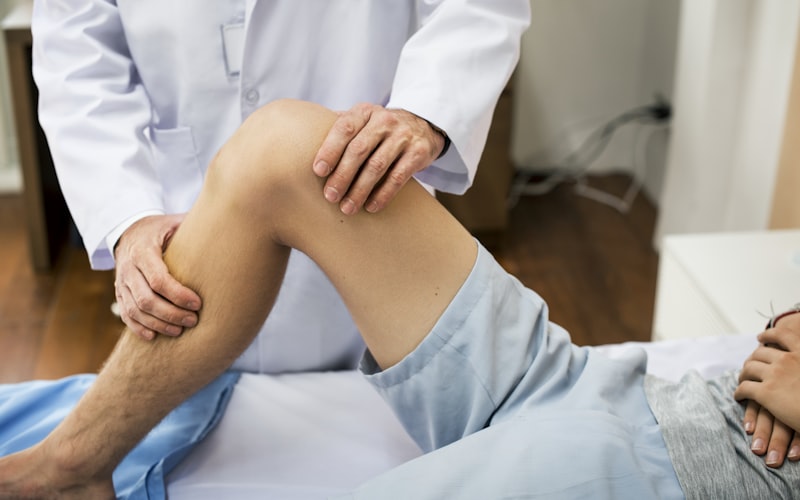
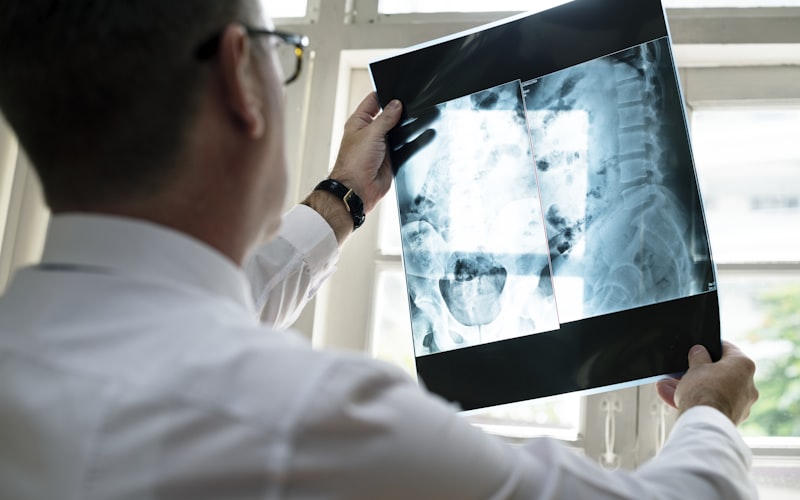
Diagnosis starts with a thorough history and a physical exam that reproduces and characterizes your symptoms. When imaging is warranted to confirm the diagnosis or rule out other causes, we coordinate it through our imaging and referral services. The goal is never to image for its own sake, but to get the specific information that changes your treatment plan.
Non-Surgical Treatment That Works
The encouraging reality is that most people with stenosis can be managed without surgery. Our conservative care for stenosis is built around one principle: create more room and tolerance for the nerves, and keep you moving.
Flexion-Based Care and Decompression
Because forward-flexed positions relieve stenosis, we emphasize flexion-based mobilization and exercise. Spinal decompression therapy can also help by gently reducing pressure across the affected segments, giving irritated nerves a chance to calm down.
Soft Tissue Work and Mobility
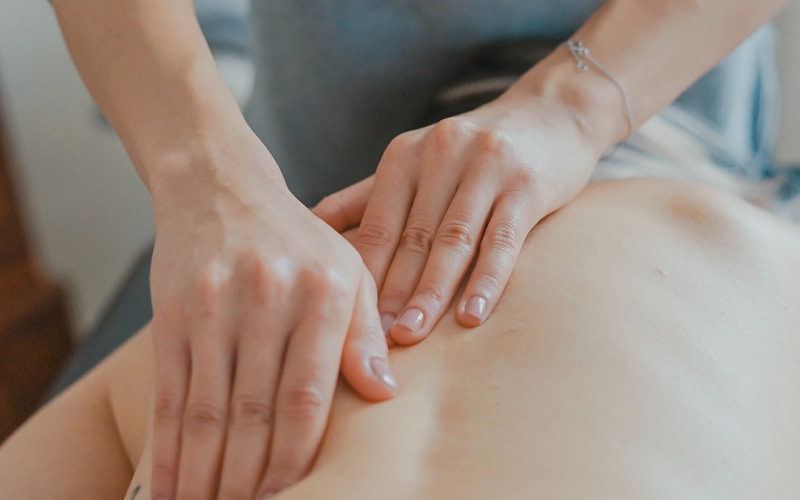
Stenosis patients almost always develop tight, guarded muscles in the lower back and hips. Targeted muscle and tendon therapy restores mobility to the surrounding tissues so you can move with less effort and less pain.
Posture, Core, and Conditioning
Strengthening the deep core and improving the way you carry your spine reduces the load on the narrowed segments. Our posture and gait analysis identifies the specific movement faults that are making your symptoms worse, and we build a simple, progressive program around them.
What You Can Do at Home
- Choose the bike over the treadmill. Stationary cycling keeps you in a forward-leaning position, so most stenosis patients can ride comfortably long after walking has become painful. It is an excellent way to keep your heart and legs conditioned.
- Use the "lean and rest" strategy. When walking flares your legs, stop and lean forward on a counter or rail for a minute. Symptoms usually settle quickly, and you can continue.
- Keep moving anyway. The worst thing for stenosis is to stop moving entirely, which leads to deconditioning and more disability. The goal is smarter movement, not less.
When Surgery Is Worth Considering
Surgery has a real role for a minority of patients, particularly when there is progressive weakness, when leg symptoms are severe and unrelenting despite a genuine course of conservative care, or in the rare emergency of bowel or bladder changes (which require immediate attention). For most people, though, conservative care is the right and effective first step, and it preserves surgery as an option rather than a starting point.
You Have More Options Than You Think
If you have been told you have spinal stenosis and assume a major operation is inevitable, let us evaluate you first. Many patients are surprised by how much function they can recover with the right non-surgical plan. Contact Bromberg Chiropractic in Cambridge to get a clear diagnosis and a realistic plan to get you walking comfortably again.